Vietnam ID Card Photo (3×4 cm / 30×40 mm) Requirements and Size Guide
Everything you need to know about Vietnam ID card (CCCD — Căn cước công dân) photo requirements, including exact dimensions, background color, pose rules, and how to take a compliant Vietnamese national identity card photo at home.
Vietnam ID Card Photo Specifications
Requirement
Specification
Country
Vietnam (Việt Nam)
Document Type
ID Card — Căn cước công dân (CCCD) chip-based
Photo Size
3 × 4 cm (30 × 40 mm / 1.18 × 1.57 inches)
Resolution (DPI)
300–600
Head Size
70–80% of photo (~24–28 mm from chin to crown)
Top Margin
~2.5 mm from top edge to top of head
Background Color
Plain white
Color
Color only (black and white not accepted)
Number of Photos
2 identical photos
Recency
Taken within the last 6 months
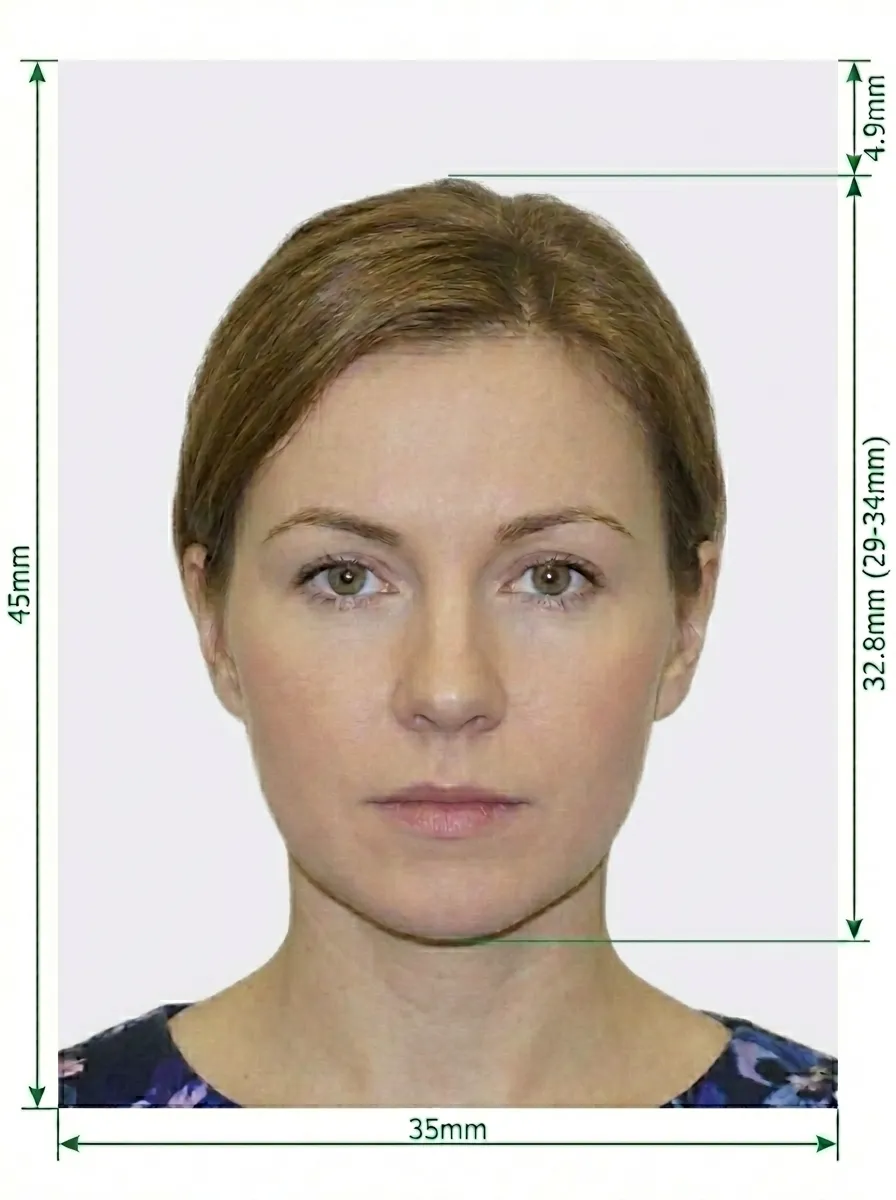
Vietnam ID Card Photo Size Diagram
Key measurements: The photo must be exactly 3×4 cm (30×40 mm). Your head should occupy 70–80% of the photograph, approximately 24–28 mm from chin to crown, with about 2.5 mm from the top edge to the top of your head.
Don't worry about getting the perfect photo. Upload any photo taken at home, and our AI-powered tool will automatically crop to the correct 3×4 cm size, remove and replace the background with white, adjust the head size, and ensure your photo meets all Vietnam ID card requirements.
Detailed Vietnam ID Card Photo Requirements
The Vietnam Căn cước công dân (CCCD) is the chip-based electronic national identity card issued by the Ministry of Public Security (Bộ Công an) to all Vietnamese citizens aged 14 and above. It replaced the older Chứng minh nhân dân (CMND). Below is a comprehensive guide to CCCD photo requirements.
CCCD vs. CMND
CCCD (Căn cước công dân) — Current chip-based electronic ID card with biometric data, issued since 2016. Valid for life (no expiration)
CMND (Chứng minh nhân dân) — Older paper-based ID card, being phased out. All citizens are required to transition to CCCD
Both use the same 3×4 cm (30×40 mm) photo format
Photo Basics
Your photo must be in color — black and white not accepted
Must be a recent photo, taken within the last 6 months
The photo must be clear, sharp, and in focus
No filters or editing — do not digitally alter your appearance
Must reflect your current appearance
Size and Dimensions
Photo size: exactly 3 × 4 cm (30 × 40 mm)
Head height: approximately 24–28 mm from chin to crown (70–80% of photo)
Top margin: approximately 2.5 mm from top edge to top of head
Printed on glossy or coated photo-quality paper
Pose and Expression
Face the camera directly — head not tilted or turned
Maintain a neutral facial expression with your mouth closed
Both eyes must be open and clearly visible
Look straight at the camera lens
Ensure your forehead, ears, neck, and shoulders are visible
Background
Use a plain white background
No patterns, textures, or objects visible behind you
No shadows on your face or behind your head
Glasses
Glasses are NOT allowed in Vietnam CCCD photos. You must remove all eyewear, including sunglasses and tinted lenses, before taking the photo.
Head Coverings
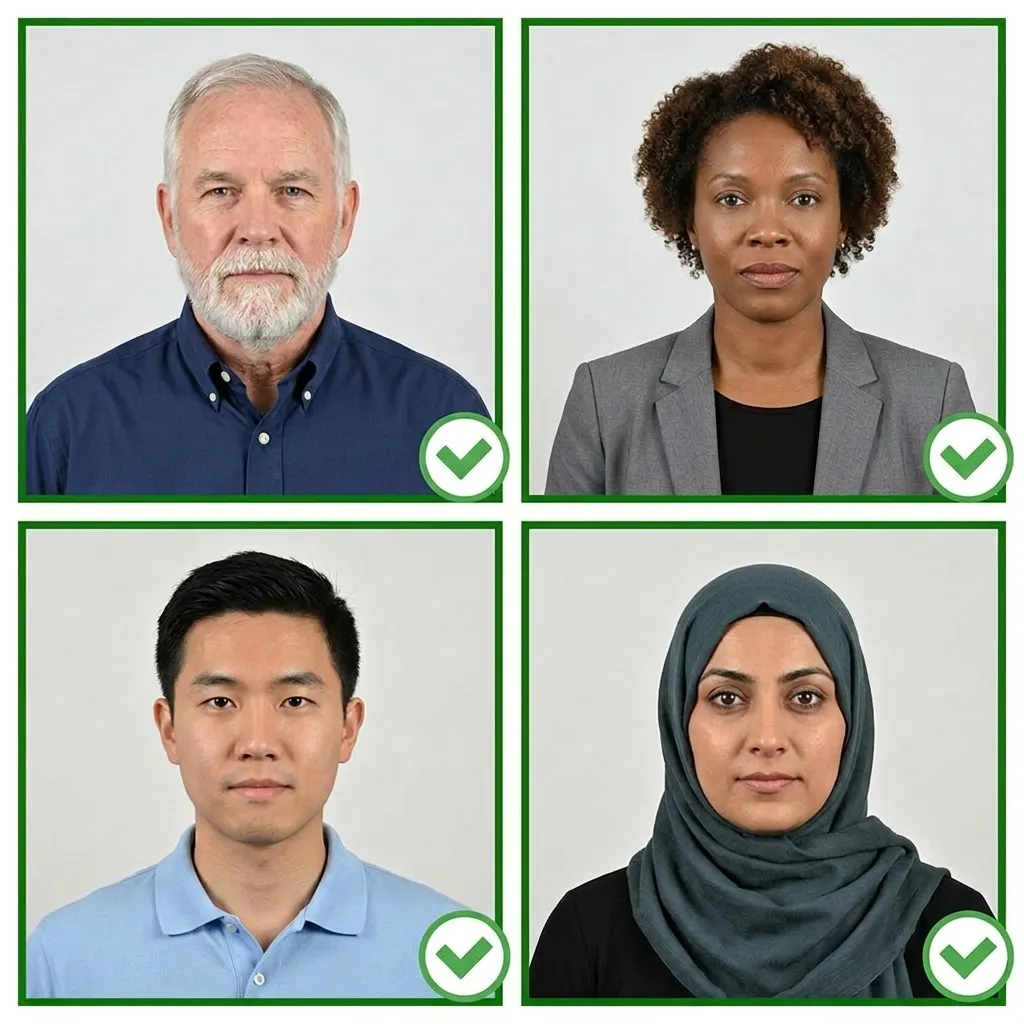
No hats, scarves, or head coverings are allowed, unless worn for religious purposes
If worn for religious reasons, your full face must still be clearly visible from chin to forehead
Hair must not cover your face or eyes
Clothing
Wear normal everyday clothing
Do not wear uniforms (military, police, etc.)
Avoid striped or complex pattern clothing
Avoid wearing white tops that blend with the white background
Children and Minors (Ages 14–17)
Vietnamese citizens aged 14 and above are required to obtain a CCCD
Children aged 14–17 should follow the same photo requirements as adults
You don't need a professional studio. Follow these steps to take a compliant Vietnam CCCD photo at home using your smartphone.
1
Use a Smartphone or Digital Camera
Any modern smartphone camera works well. Clean the lens and set to highest resolution. Ask someone to take the photo — selfies have the wrong angle and can cause distortion.
2
Find Good Lighting
Stand facing a window with natural daylight. Avoid direct sunlight and harsh shadows. Use multiple indoor light sources if needed to ensure even lighting across your face.
Tip: Don't worry about your background color. Our AI tool will automatically replace it with the required plain white.
3
Pose and Expression
Face the camera directly with a neutral expression. Both eyes open, mouth closed. Keep your head level. Ensure your forehead, ears, neck, and shoulders are all visible in the frame.
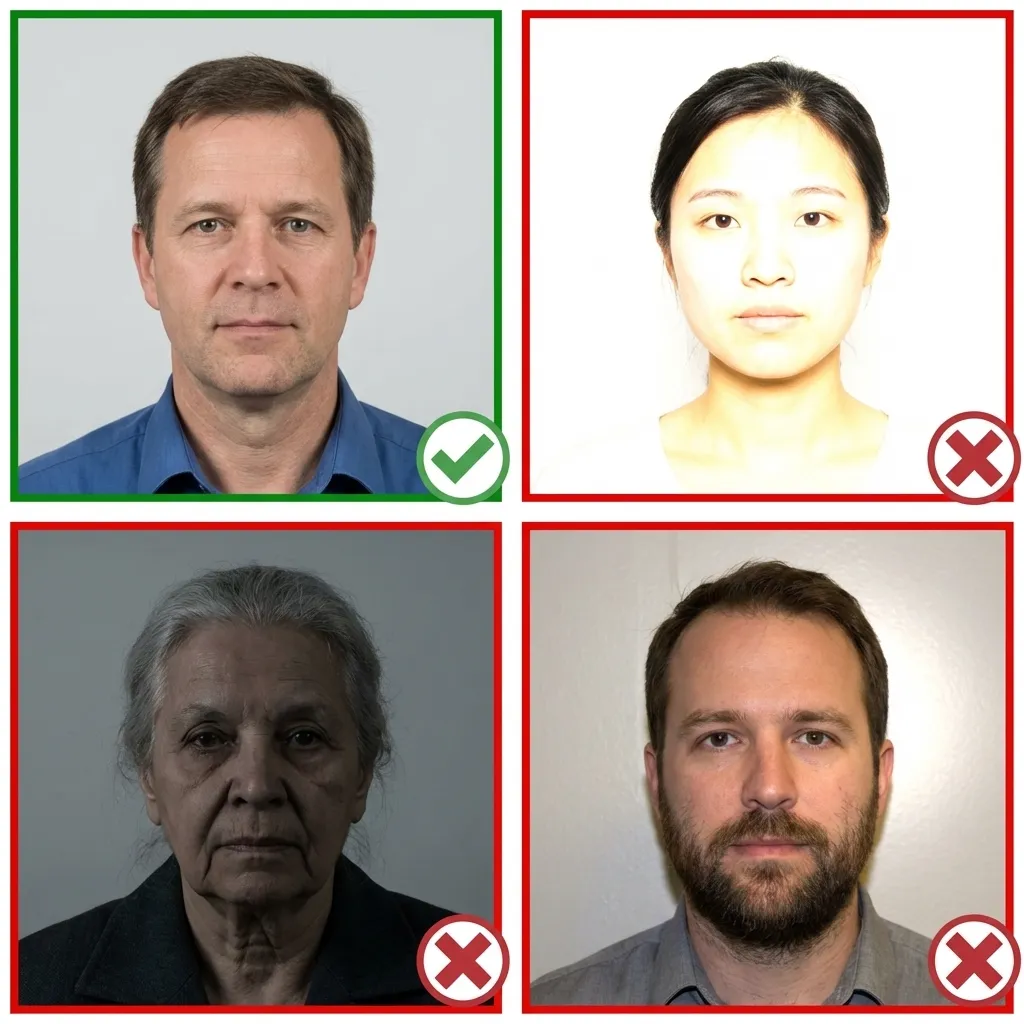
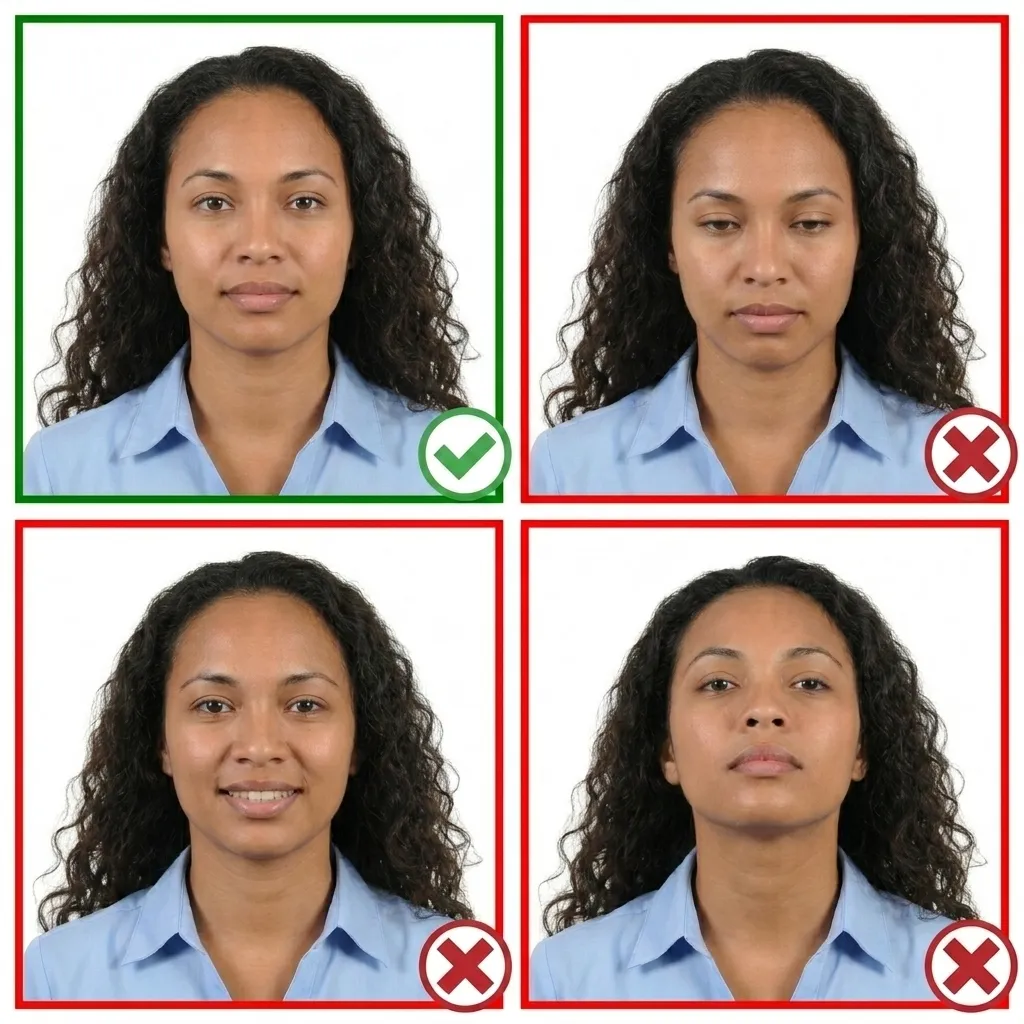
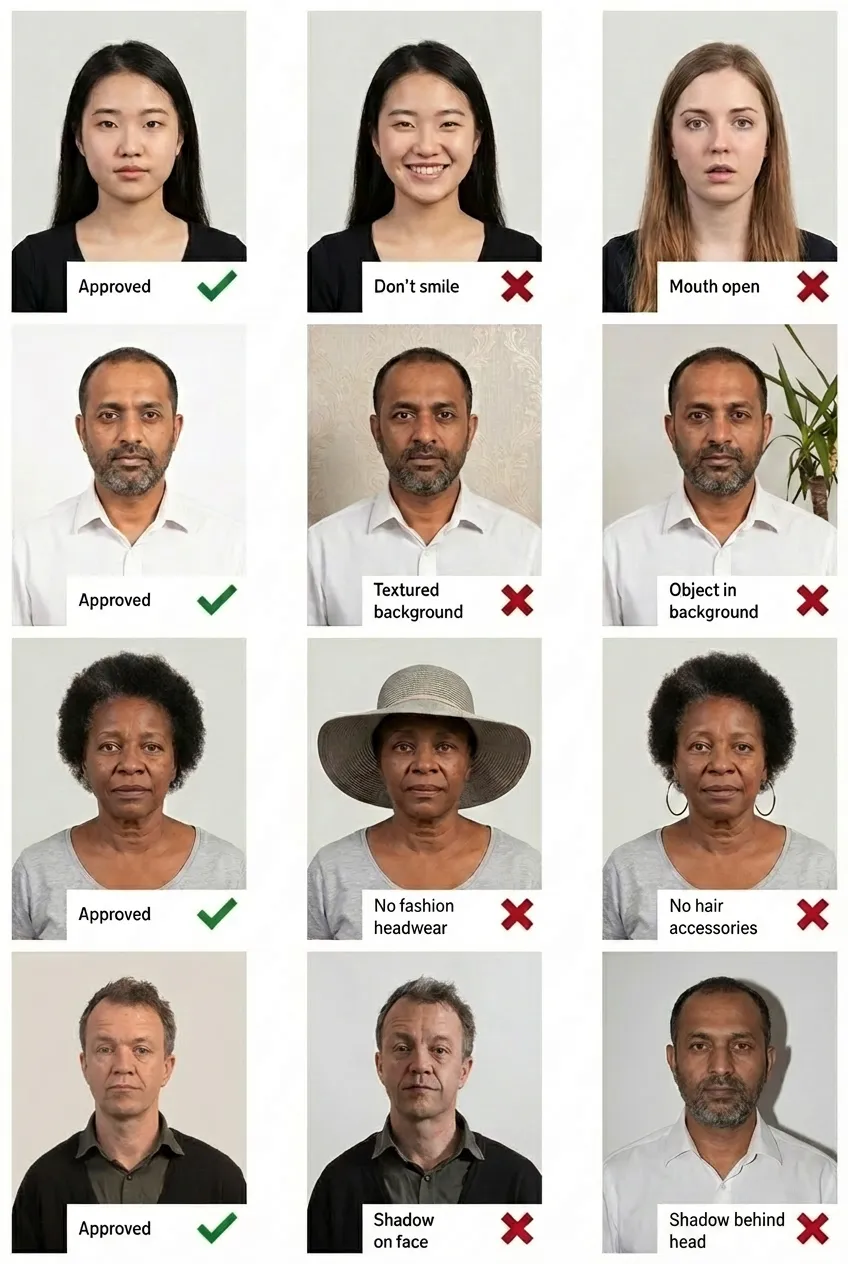
Good and Bad Examples of Vietnam ID Card Photos
Comparison of acceptable and unacceptable ID card photos
Frequently Asked Questions
What size is a Vietnam ID card photo?
A Vietnam ID card (CCCD) photo must be exactly 3×4 cm (30×40 mm) — smaller than the 40×60 mm format used for Vietnamese passports and visas. Your head should occupy 70–80% of the photograph.
What is the difference between CCCD and CMND?
CCCD (Căn cước công dân) is the current chip-based electronic ID card that replaced the older CMND (Chứng minh nhân dân). The CCCD contains an embedded microchip with biometric data (fingerprints, iris scan) and has no expiration date. All Vietnamese citizens aged 14 and above are required to have a CCCD.
Can I wear glasses in my Vietnam ID card photo?
No. Glasses, sunglasses, and tinted lenses are strictly not permitted in Vietnam CCCD photos. You must remove all eyewear before taking the photo.
How many photos do I need for CCCD?
Typically 2 identical color photographs in 3×4 cm format are required when applying for a new CCCD or replacing a lost/damaged card.
Can I take my Vietnam ID card photo with my phone?
Yes! Upload your photo to PassportPhoto.help and our AI will automatically crop, resize, remove the background, and ensure it meets all Vietnam CCCD requirements.
At what age do Vietnamese citizens need a CCCD?
Vietnamese citizens aged 14 and above are required to obtain a CCCD. For children under 14, a birth certificate serves as the primary identification document.
Can I wear a head covering?
Head coverings (hats, scarves) are not allowed unless worn for religious reasons. Your full face must be clearly visible from chin to forehead. Hair must not cover your face or eyes.