Complete guide to Schengen visa photo requirements under the EU Visa Code (Regulation EC 810/2009), applicable to all 26 Schengen Area countries. Covers tourist, business, family visit, transit, and national visa photo specifications.
| Requirement | Specification |
|---|---|
| Region | Schengen Area (26 countries) |
| Document Type | Schengen Visa (Tourist, Business, Family Visit, Transit, etc.) |
| Photo Size | 35 × 45 mm (3.5 × 4.5 cm) |
| Resolution (DPI) | 600 |
| Face Size | 32–36 mm from chin to crown |
| Head Proportion | 70–80% of the photograph |
| Background Color | Plain light-coloured (light grey recommended) |
| Color Mode | Color only |
| Photo Paper Type | Matte or glossy photo paper |
| Recency | Taken within the last 6 months |
| Number of Photos | 2 identical photos required |
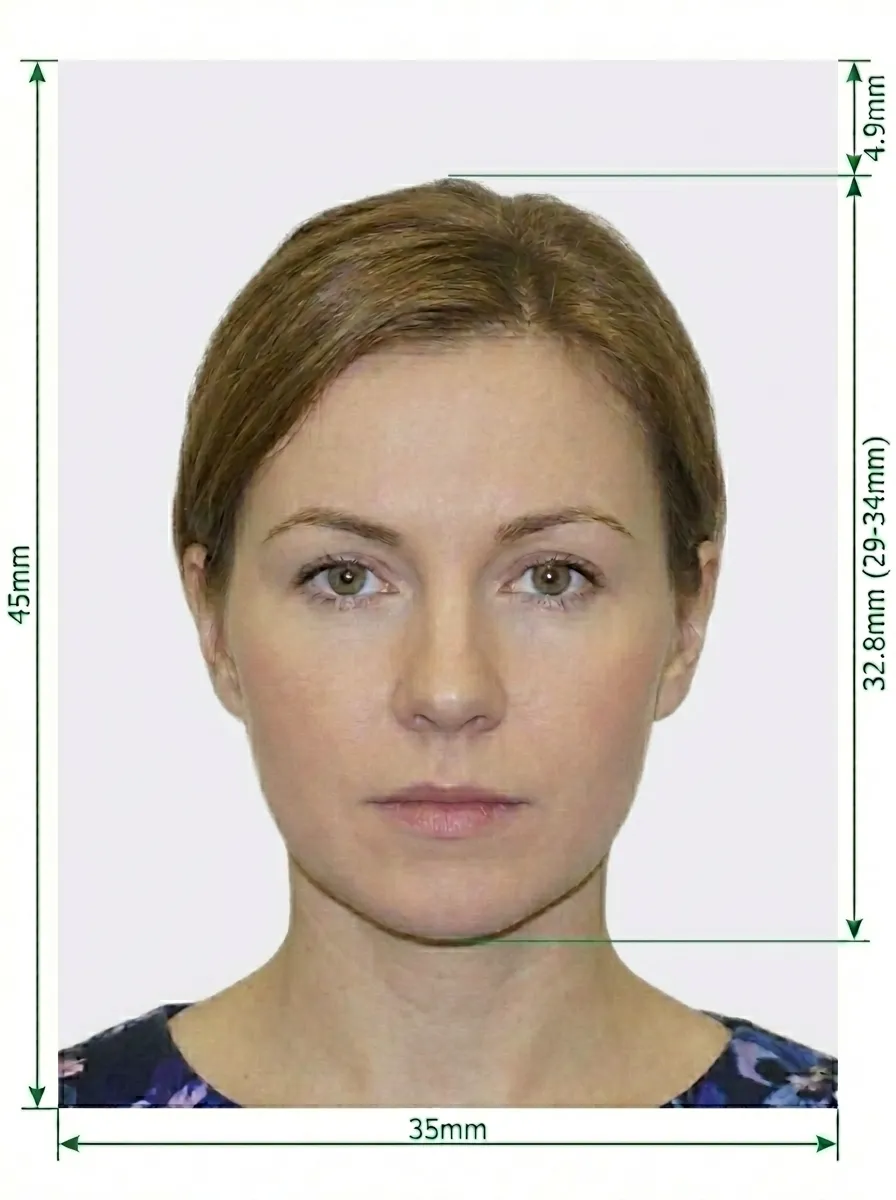
Schengen visa photos are governed by the EU Visa Code (Regulation EC 810/2009), Annex II, and must comply with ICAO Document 9303 standards. The VIS Reform 2021 (Regulation EU 2021/1134) has updated biometric requirements to improve facial recognition accuracy. Below is a comprehensive guide to ensure your photo is accepted by any Schengen Area consulate or embassy.
The following 26 countries are part of the Schengen Area and share the same visa photo requirements:
The Schengen visa photo requirements apply to all visa categories:
Glasses are allowed with conditions, but it is strongly recommended to remove them for the best result:
Source: EU Visa Code (Regulation EC 810/2009), ICAO Document 9303
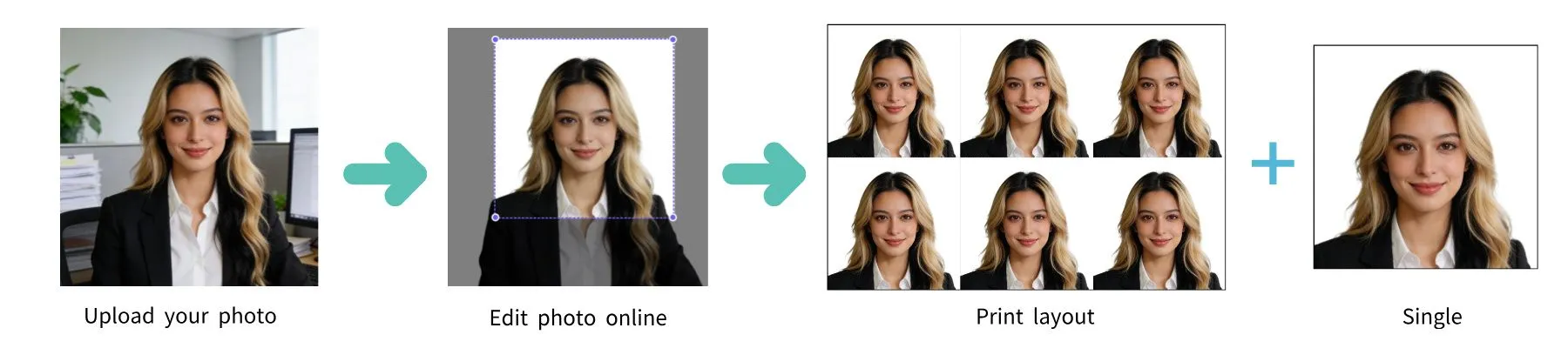
You don't need a professional studio. Follow these simple steps to take a compliant Schengen visa photo at home using your smartphone.
Any modern smartphone camera (iPhone, Samsung Galaxy, Google Pixel, etc.) is more than capable of taking a visa-quality photo. Make sure the lens is clean and the camera is set to the highest resolution.
Place your phone on a tripod or ask someone to take the photo for you. Selfies tend to have the wrong angle and distortion.
Stand facing a window with natural daylight for the best even lighting. Avoid direct sunlight, which creates harsh shadows. If using indoor lighting, use multiple light sources from different angles to eliminate shadows.
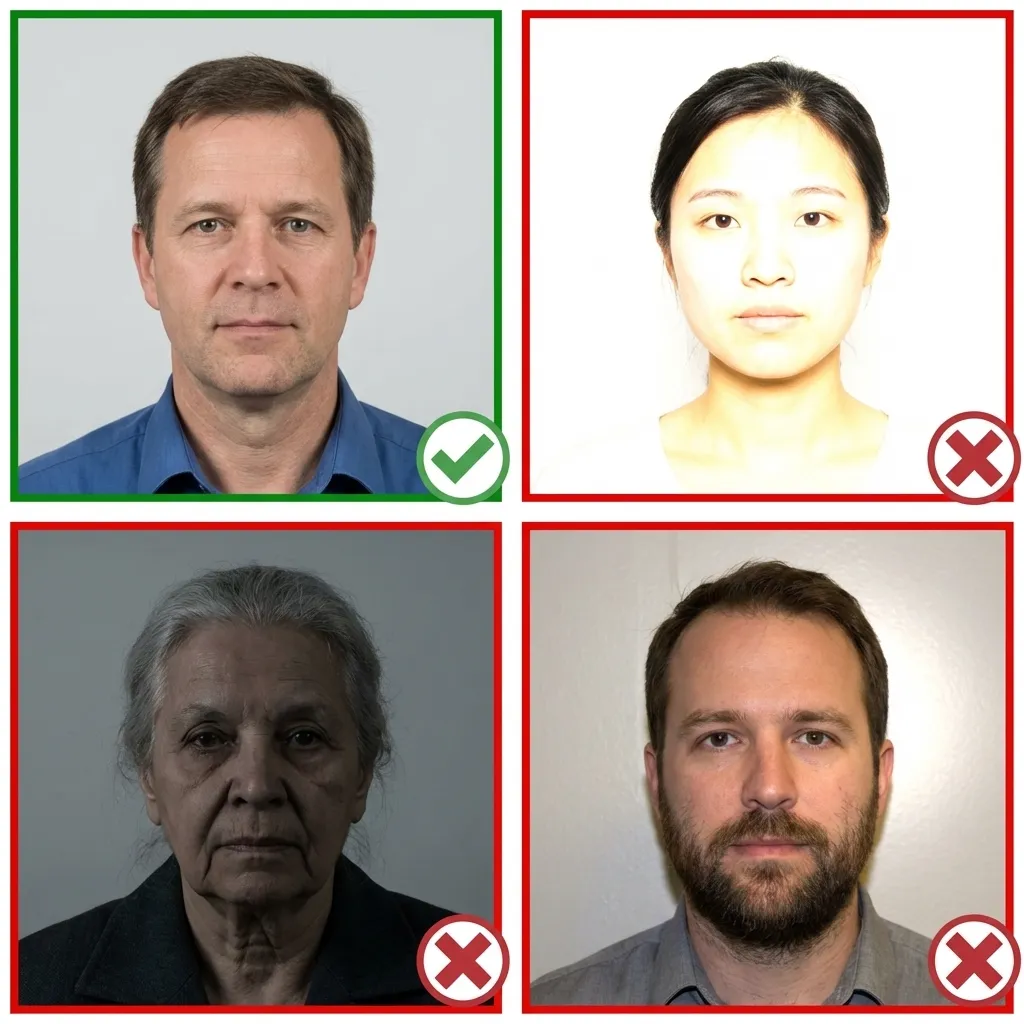
Wear your normal everyday clothing. Avoid uniforms and light-coloured tops that blend with the background. If you wear religious head coverings daily, you may keep them on as long as your full face is visible.
Make sure your hair does not cover your eyes or cast shadows on your face.
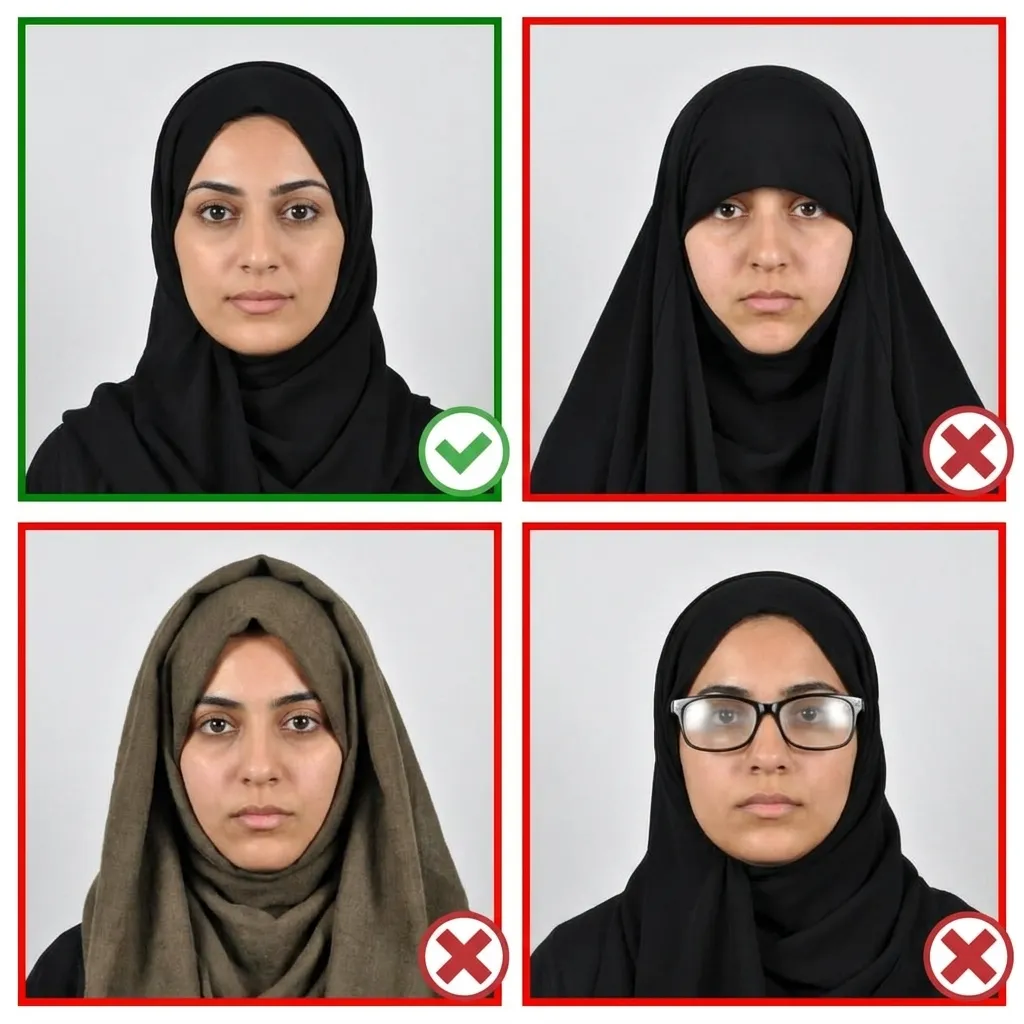
Stand about 1.5 metres in front of the camera with your head facing directly forward. Keep your shoulders relaxed and your head level — not tilted. Ensure your entire face from chin to forehead is visible.
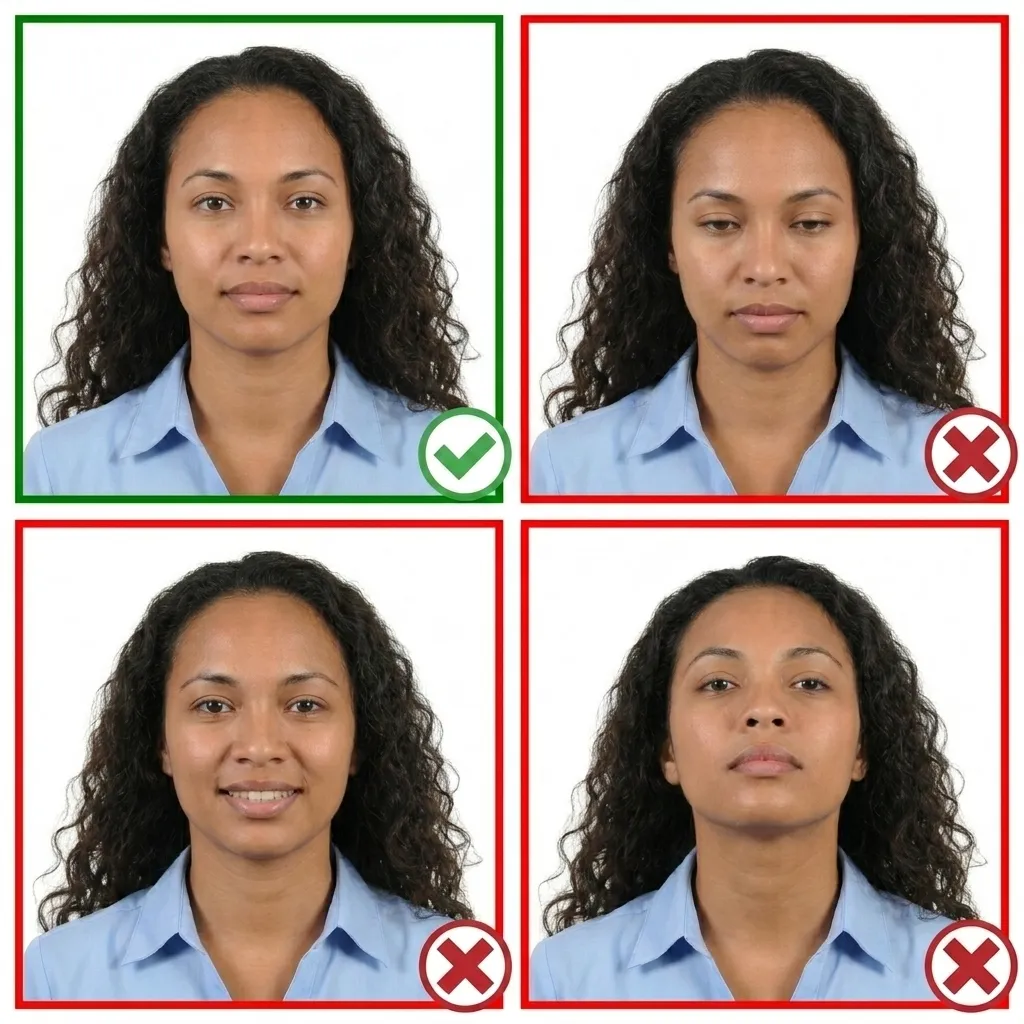
Keep your face relaxed with a neutral expression. Both eyes must be open and your mouth closed. Do not smile — the Schengen visa requires a completely neutral expression with no raised eyebrows.
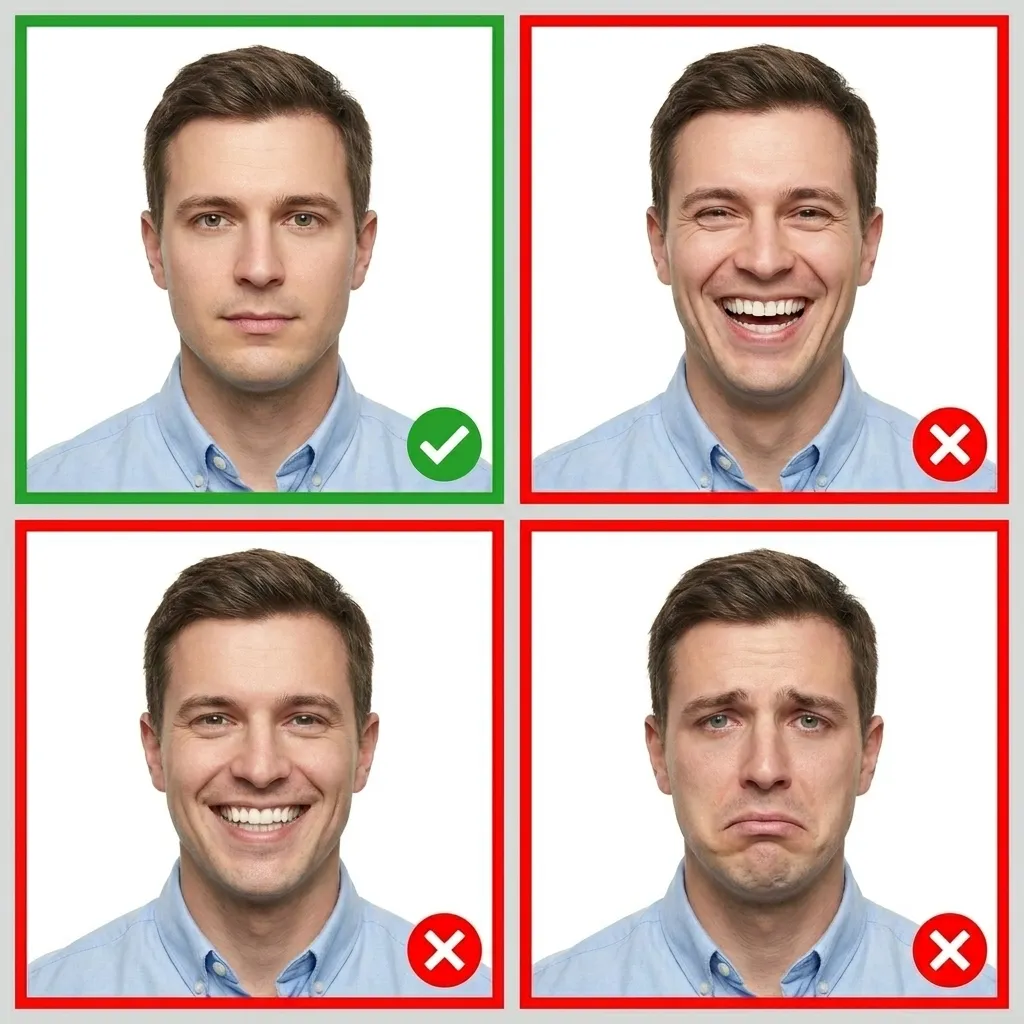
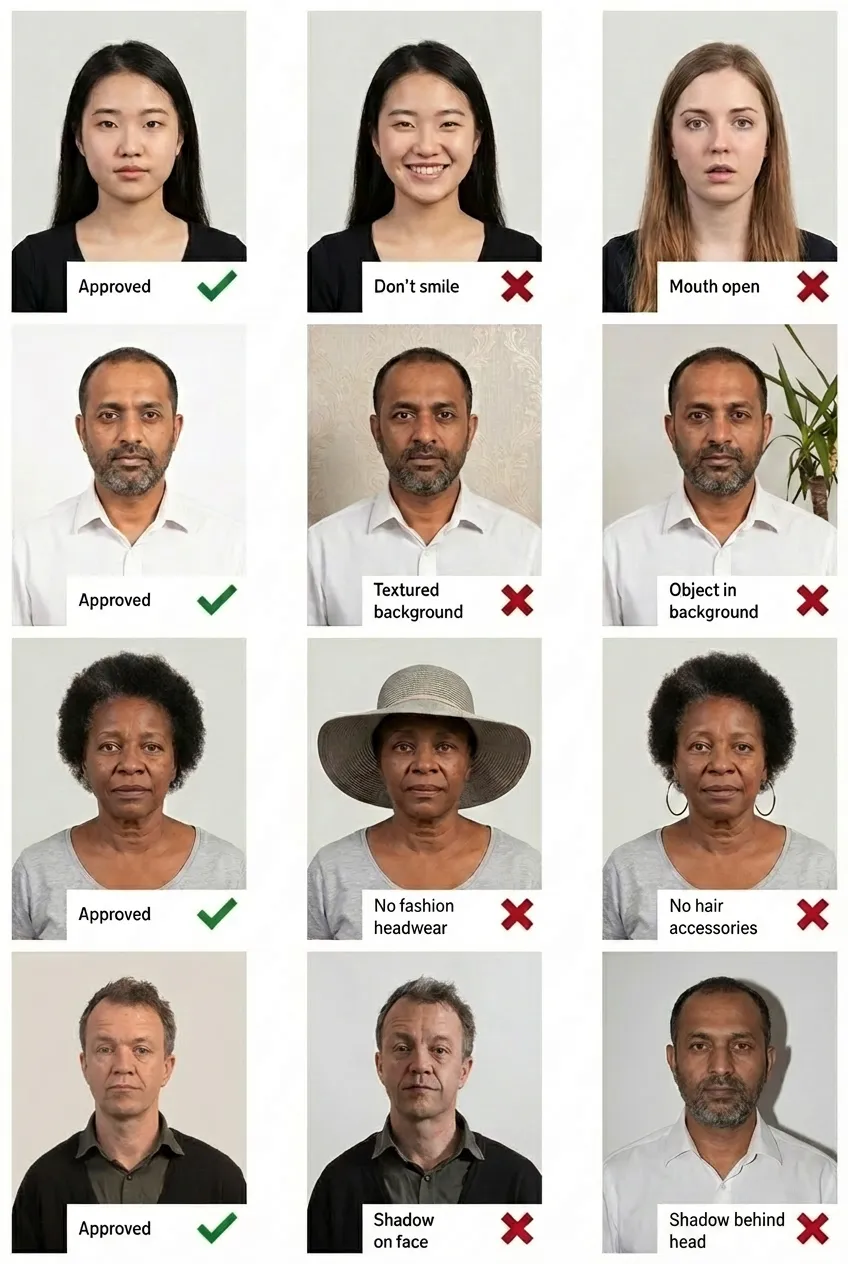
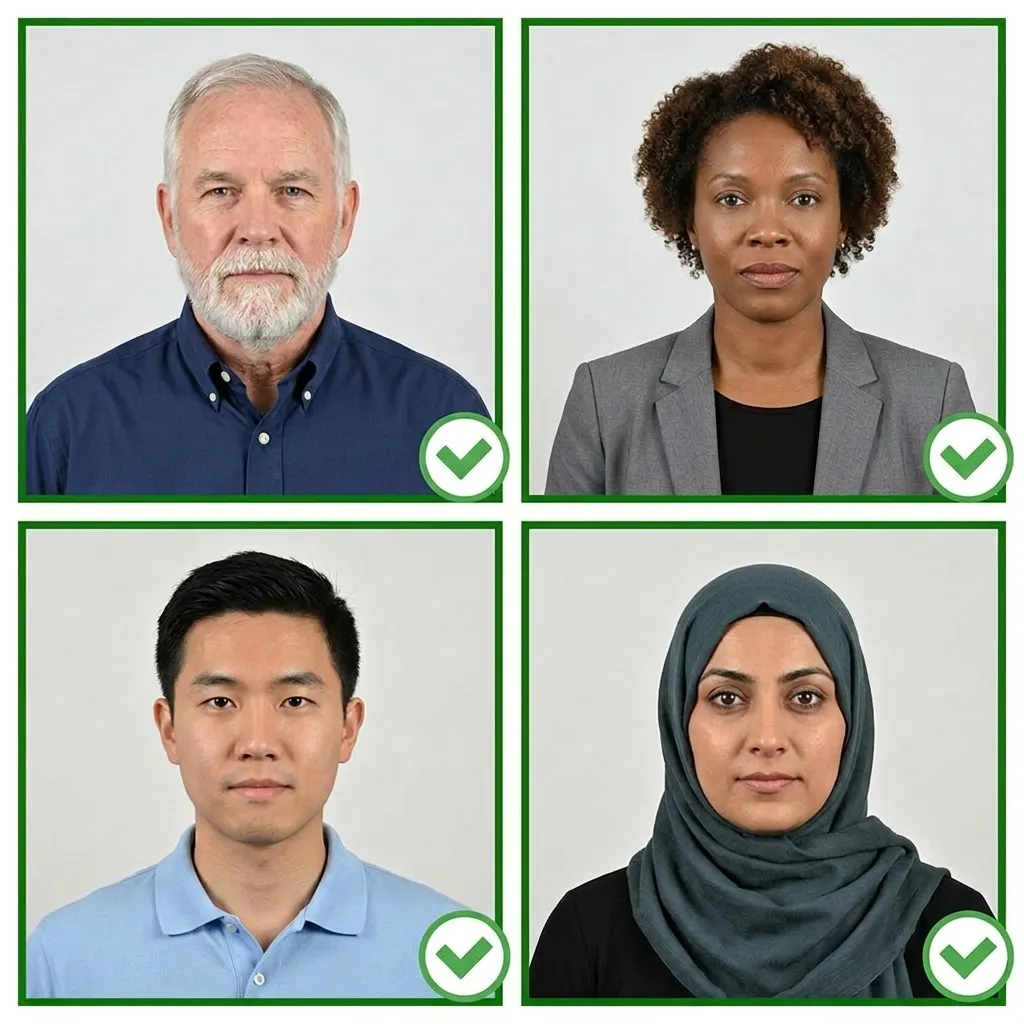
Comparison of acceptable and unacceptable visa photos
A Schengen visa photo must be 35x45mm (3.5x4.5cm). Your face must measure between 32mm and 36mm from chin to crown, occupying 70-80% of the photograph. The photo must be printed in color on matte or glossy photo paper at a minimum of 600 DPI.
The Schengen visa photo format is required for all 26 Schengen Area countries: Austria, Belgium, Croatia, Czech Republic, Denmark, Estonia, Finland, France, Germany, Greece, Hungary, Iceland, Italy, Latvia, Liechtenstein, Lithuania, Luxembourg, Malta, Netherlands, Norway, Poland, Portugal, Slovakia, Slovenia, Spain, Sweden, and Switzerland. Bulgaria and Romania have also joined the Schengen Area and accept the same photo format.
Glasses are allowed with conditions: lenses must be clear (no sunglasses or tinted lenses), there must be no glare or reflection, and frames must not be thick or cover your eyes. However, it is strongly recommended to remove glasses for the best result and to avoid rejection.
No. You must maintain a neutral expression with your mouth closed. Smiling, frowning, and raised eyebrows are not permitted. Both eyes must be open and clearly visible, looking directly at the camera.
Yes. Any modern smartphone with a good camera can take a Schengen visa-quality photo. Use the rear camera, ensure good lighting, stand against a plain light-coloured background, and have someone else take the photo (avoid selfies which cause distortion). Then use our tool to crop and format it to the exact 35x45mm specification at 600 DPI.
The background must be a plain light colour. Light grey is recommended for the best contrast. No patterns, objects, shadows, or other people should be visible. The background must provide sufficient contrast with your face. If you don't have a suitable background, our tool will automatically replace it with the correct colour.
Your Schengen visa photo must have been taken within the last 6 months. It should reflect your current appearance. Using an older photo may result in your visa application being delayed or rejected by the consulate or embassy.
You must provide 2 identical printed photos with your application. Write your name and visa application number on the back of each photo using capital letters — use a soft pencil or ballpoint pen and press lightly to avoid damaging the photo. Do not attach staples, paper clips, or pins to the photos. Place the photos in a protective envelope to prevent damage during transit.