EU Passport Photo (35 x 45 mm) Requirements and Size Guide

Complete guide to European Union passport photo requirements governed by ICAO Document 9303 (Machine Readable Travel Documents) biometric standards. These specifications apply to all 27 EU member states and are designed for compatibility with automated facial recognition at border control e-gates across the Schengen Area.
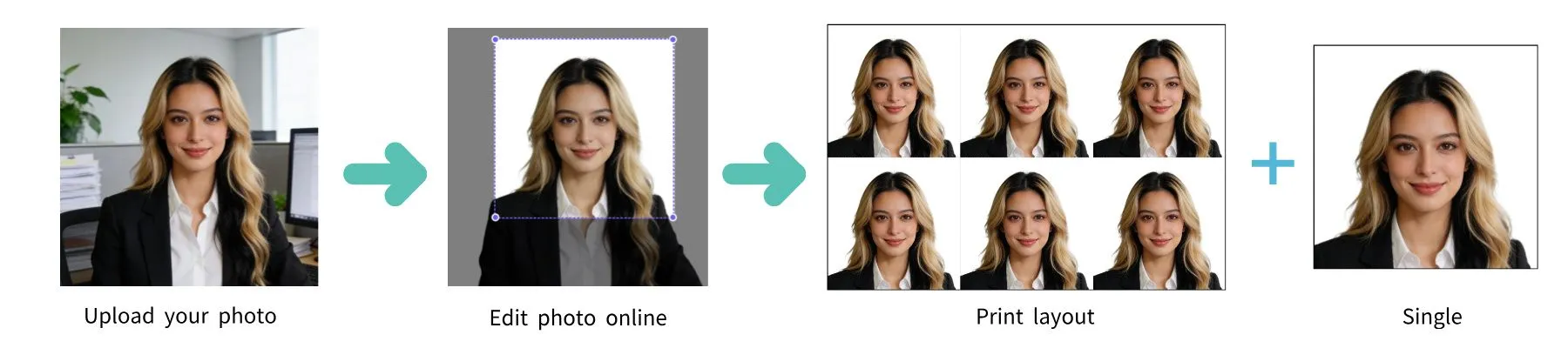
How PassportPhoto.help works - Upload, Crop, Download

EU Passport Photo Specifications

RequirementSpecification
RegionEuropean Union (27 member states)
Document TypePassport (Standard EU biometric passport)
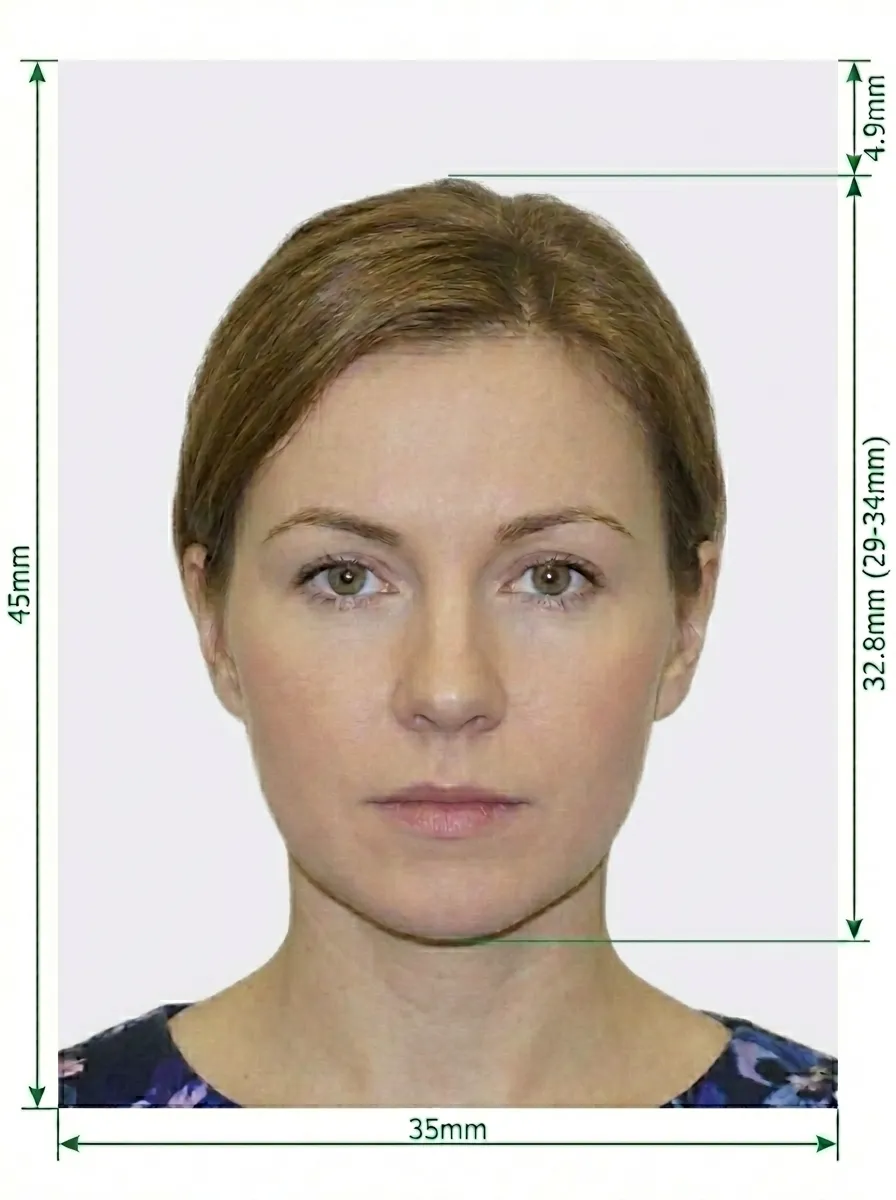
Photo Size35 x 45 mm (3.5 x 4.5 cm)
Resolution (DPI)600
Face Size32-36 mm (chin to crown)
Head Proportion70-80% of the photograph
Background ColourPlain white or light grey
Digital Photo Size826 x 1062 pixels (600 DPI)
ColourColour only
Photo Paper TypeMatte photo paper
RecencyWithin 6 months
Number of PhotosVaries by member state (1-2)

EU Passport Photo Size Diagram

EU Passport Photo Size Diagram - 35x45mm with face size 32-36mm
Key measurements: The photo must be exactly 35x45mm (3.5x4.5cm). Your face must measure between 32mm and 36mm from chin to crown. The face should occupy 70-80% of the vertical frame. This is the ICAO 9303 standard used by all EU member states.
Don't worry about getting the perfect photo. Upload any photo taken at home, and our AI-powered tool will automatically crop to the correct 35x45mm size, remove and replace the background with white or light grey, adjust the face size, and ensure your photo meets all EU biometric requirements.

Detailed EU Passport Photo Requirements

EU passport photos follow the ICAO Document 9303 standard for Machine Readable Travel Documents, as implemented through EU Council Regulation 2252/2004. These standards ensure biometric compatibility for automated facial recognition at border control across the Schengen Area. Below is a comprehensive guide to ensure your photo is accepted by any EU member state authority.

Governing Standards

EU passport photo requirements are defined by three key international standards:

  • ICAO Document 9303 — Machine Readable Travel Documents, Part 3: Specifications Common to MRTDs, which sets the global baseline for biometric passport photos
  • EU Council Regulation 2252/2004 — Standards for security features and biometrics in EU passports and travel documents, specifically addressing facial image standards
  • ISO/IEC 19794-5 — Biometric data interchange formats, Part 5: Face image data, which specifies the technical requirements for biometric facial images
Why biometric? Your EU passport photo is used for automated facial recognition at border control e-gates across the Schengen Area. The neutral expression, specific face size, and plain background ensure that facial recognition algorithms can accurately match your face at border checkpoints. This is why compliance is strictly enforced.

EU Member States

The following 27 European Union member states all follow the ICAO 9303 photo standard for biometric passports:

  • Austria, Belgium, Bulgaria, Croatia, Cyprus, Czech Republic
  • Denmark, Estonia, Finland, France
  • Germany, Greece, Hungary
  • Ireland, Italy
  • Latvia, Lithuania, Luxembourg
  • Malta, Netherlands
  • Poland, Portugal
  • Romania
  • Slovakia, Slovenia, Spain, Sweden
Note: While all 27 EU member states follow the same ICAO 9303 baseline, some countries may have additional or slightly different requirements (e.g. number of photos, glasses rules, background shade). Always check with your national passport authority for country-specific details.

Size and Dimensions

  • Photo size: exactly 35 x 45 mm (3.5 x 4.5 cm)
  • Your face (from chin to crown) must measure between 32 mm and 36 mm
  • Your face should occupy approximately 70-80% of the photograph
  • The digital version at 600 DPI should be 826 x 1062 pixels
  • The photo must be printed on matte photo paper with no border, or submitted digitally

Background

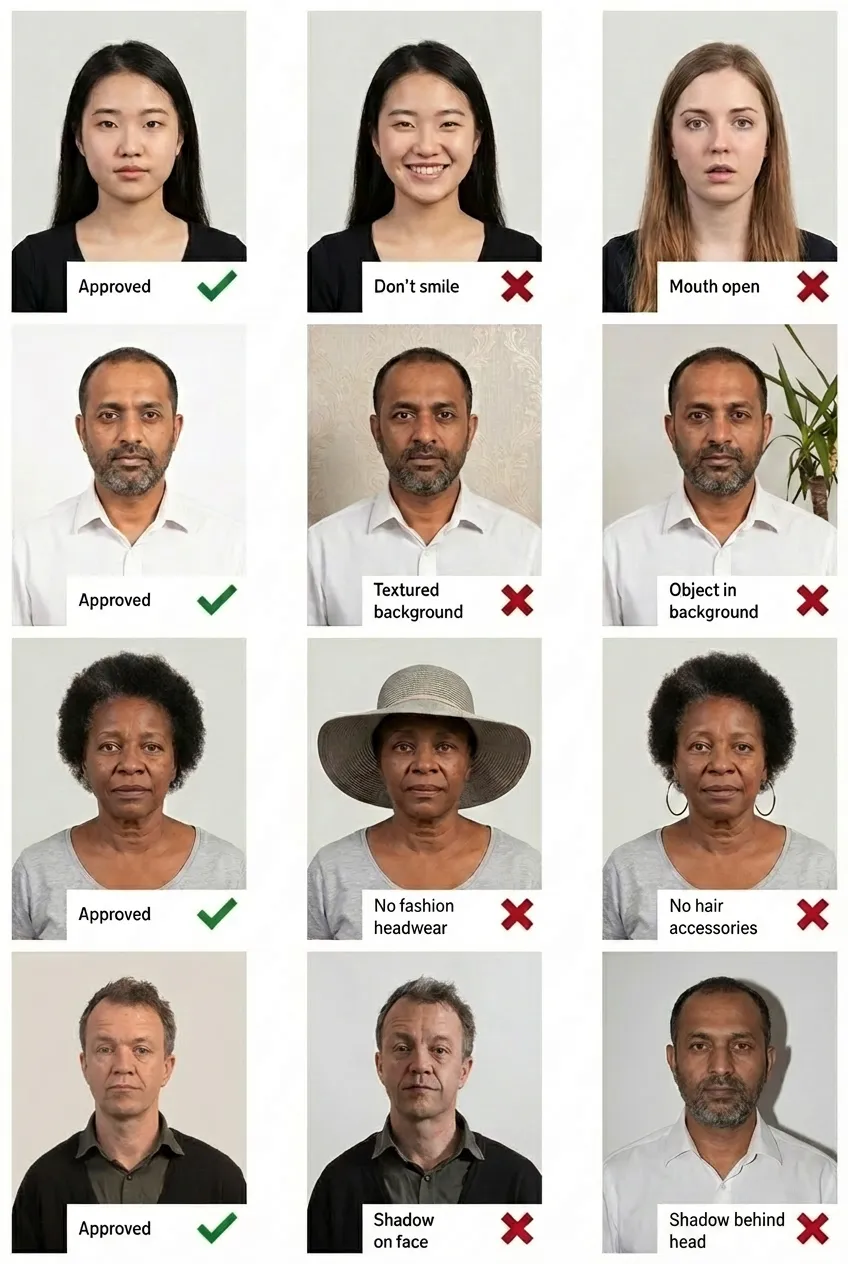
  • The background must be plain white or light grey
  • No patterns, textures, dark areas, or objects visible behind you
  • There must be clear contrast between your face and the background
  • No shadows on your face or behind your head
  • The background must be uniform in colour and brightness across the entire area

Pose and Expression

  • Face the camera directly — your head must not be tilted or turned
  • Maintain a neutral expression with your mouth closed
  • No smiling — a neutral expression is essential for biometric facial recognition
  • Both eyes must be open and clearly visible
  • Ensure no hair covers your eyes or eyebrows
  • Your face must be fully visible from the bottom of your chin to the top of your forehead, and ear to ear
Biometric requirement: The neutral expression is not just a formality. EU border control e-gates use automated facial recognition that relies on a consistent, neutral expression to accurately match your face against the biometric data stored in your passport chip. Smiling or other expressions can cause the system to fail to match you.

Glasses

The rules on glasses vary by EU member state. Many countries have moved to prohibit glasses entirely in passport photos:

  • France, Germany, Netherlands — glasses are prohibited in passport photos
  • Trend across the EU is towards a complete ban on glasses
  • Where glasses are still permitted, only clear untinted lenses are allowed
  • There must be no glare or reflection on the lenses
  • Your eyes must be clearly visible through the lenses
  • Sunglasses and tinted glasses are never allowed in any EU country
Recommendation: Remove your glasses before taking the photo. This ensures your photo will be accepted by all 27 EU member states without issues, regardless of individual national rules.

Head Coverings

  • No head covering is allowed unless worn for religious or medical reasons
  • If worn for religious or medical reasons, your full face must be visible from the bottom of your chin to the top of your forehead
  • The head covering must not cast any shadows on your face
  • No headphones, earbuds, or wireless hands-free devices

Clothing

  • Wear normal everyday clothing
  • Do not wear uniforms, except religious clothing that you wear daily
  • Avoid colours that may blend with the white or light grey background
  • Ensure your clothing does not obscure your face or neck area

Printing and Submission

The number of photos required varies by member state (typically 1-2). Check with your national passport authority for the exact number. Printed photos must meet these requirements:

  • Printed in colour on matte photo paper with no border
  • No creases, tears, or marks on the photos
  • Photos must be professional quality, clear and in focus
  • Photos must not be digitally altered or enhanced with filters

Children and Baby Photos

  • Children must be alone in the picture — no parent, toys, or dummies visible
  • No toys or dummies (pacifiers) for babies
  • Young children must have a neutral expression and look directly at the camera where possible
  • Babies: eyes do not need to be open; hand support is acceptable but the supporting hand must not be visible in the photo
  • A plain white or light coloured sheet may be used as a background for babies

Source: ICAO Document 9303 — Machine Readable Travel Documents

Make Passport/Visa Photo for Other Countries →

How to Take an EU Passport Photo at Home

You don't need a professional studio or a photo booth. Follow these simple steps to take a compliant EU passport photo at home using your smartphone.

1

Use a Smartphone or Digital Camera

Any modern smartphone camera (iPhone, Samsung Galaxy, Google Pixel, etc.) is more than capable of taking a passport-quality photo. Make sure the lens is clean and the camera is set to the highest resolution.

Place your phone on a tripod or ask someone to take the photo for you. Selfies tend to have the wrong angle and distortion.
Taking passport photo with smartphone or camera
2

Find Good Lighting

Stand facing a window with natural daylight for the best even lighting. Avoid direct sunlight, which creates harsh shadows. If using indoor lighting, use multiple light sources from different angles to eliminate shadows.
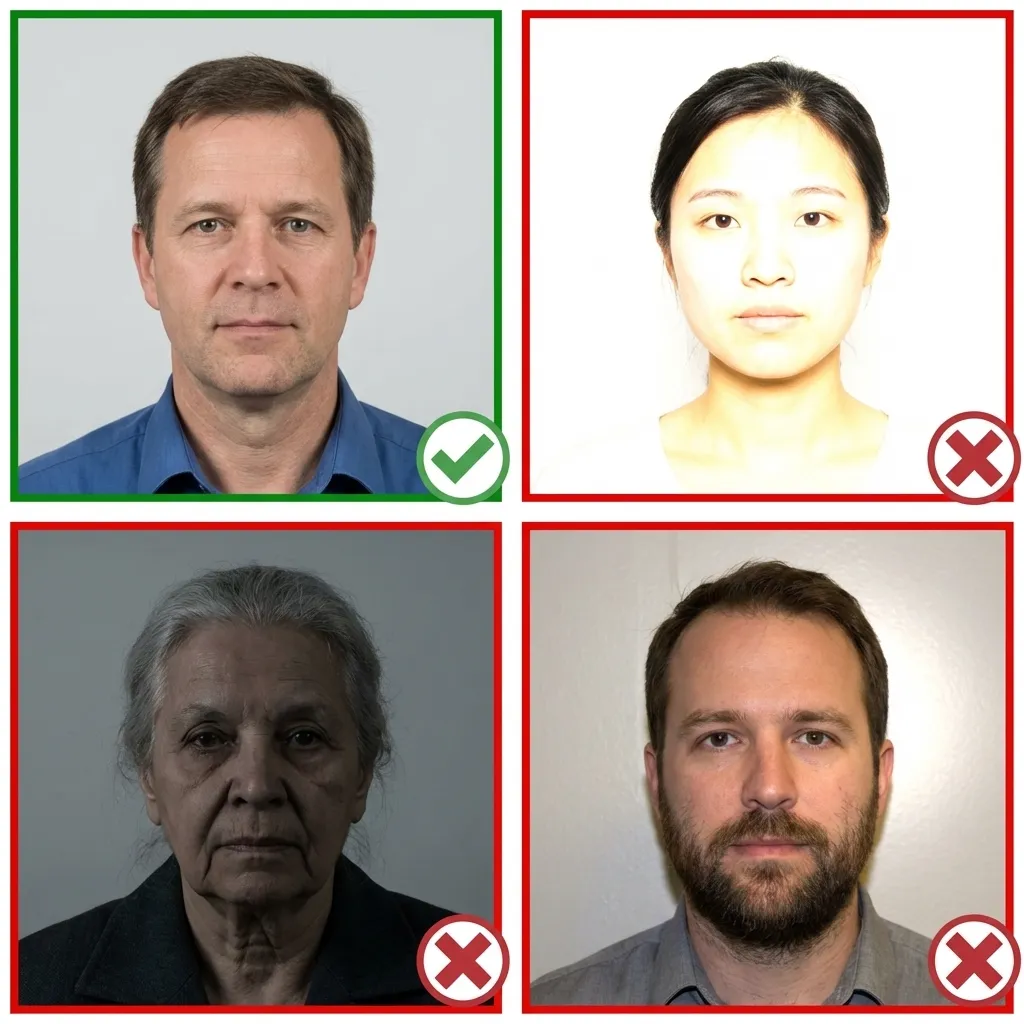
Tip: Don't worry if your background isn't perfectly white or light grey. Our AI tool will automatically remove and replace the background with the required colour.
Proper lighting setup for passport photo
3

Dress Appropriately

Wear your normal everyday clothing. Avoid uniforms and colours that blend with the white or light grey background. If you wear religious head coverings daily, you may keep them on as long as your full face is visible.

Remove your glasses before taking the photo to ensure acceptance across all EU countries.
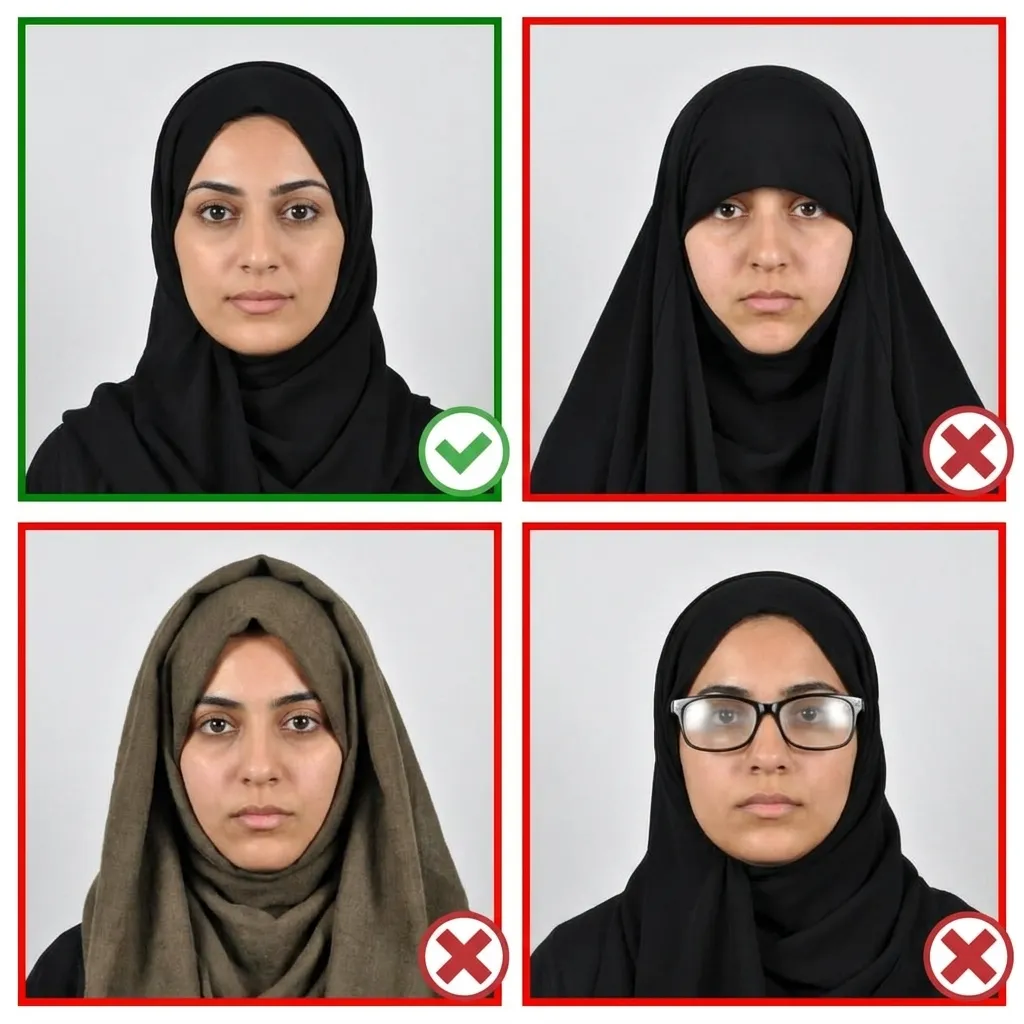
Appropriate attire for passport photos
4

Pose Correctly

Stand about 1.5 metres (5 feet) in front of the camera with your head facing directly forward. Keep your shoulders relaxed and your head level — not tilted. Ensure your entire face from chin to forehead is visible, with head, shoulders, and upper body in the frame.
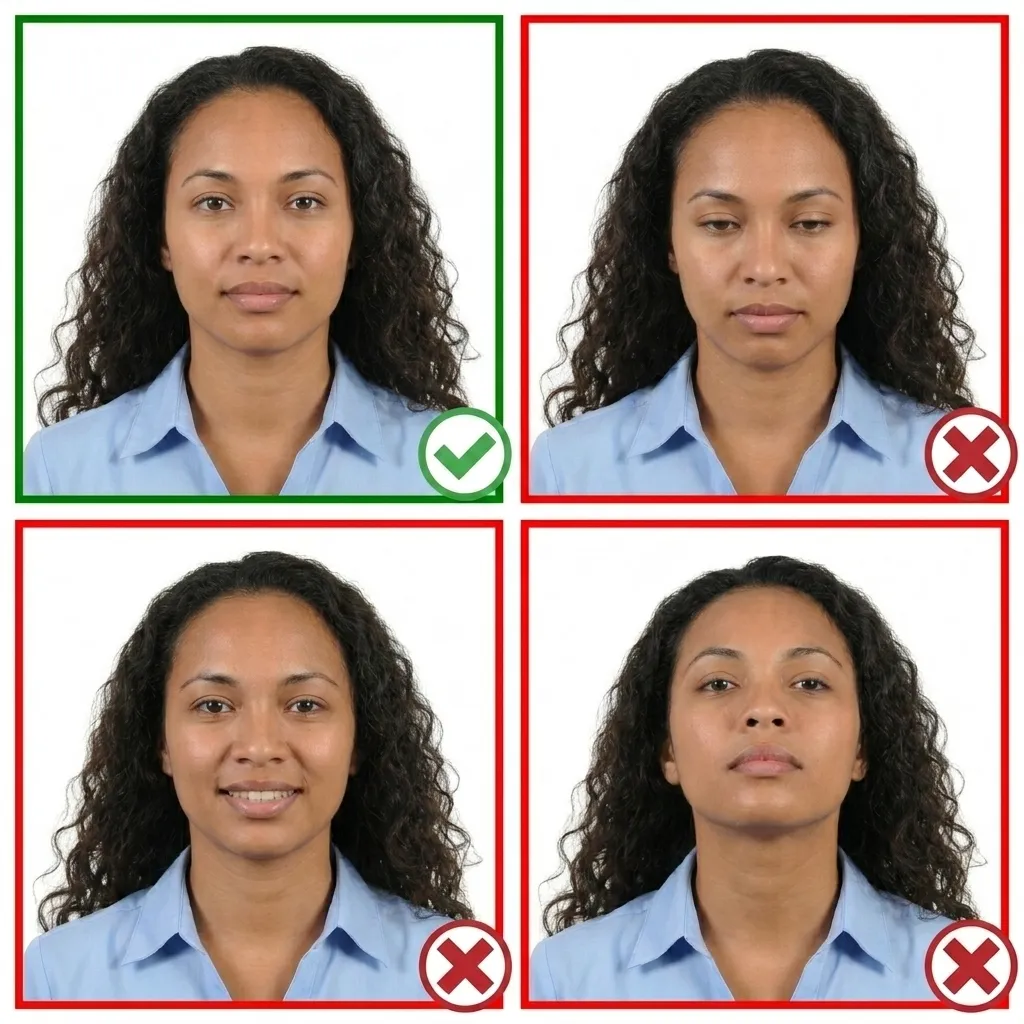
Correct posing for passport photo
5

Maintain a Neutral Expression

Keep your face completely relaxed with a neutral expression. Both eyes must be open and your mouth closed. Do not smile — this is essential for biometric facial recognition at EU border e-gates. No squinting, frowning, or any exaggerated expressions.
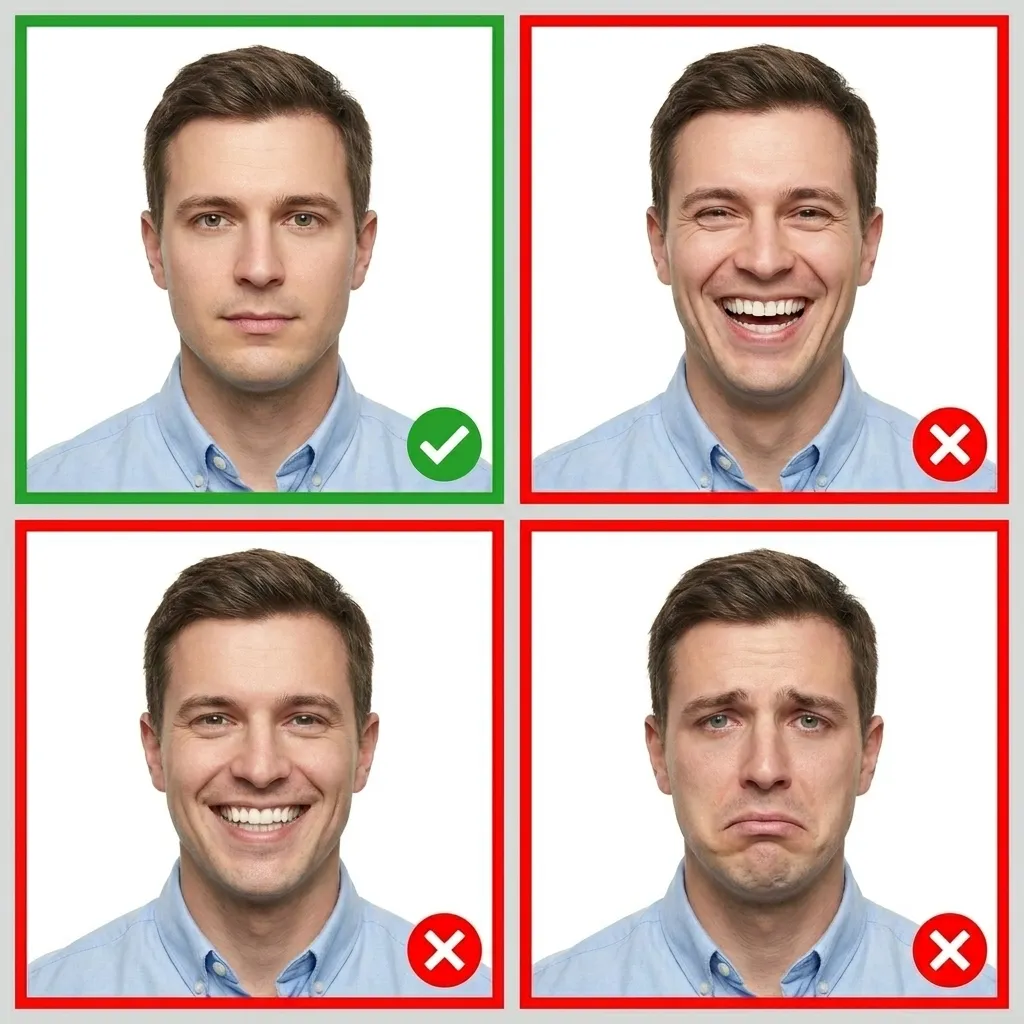
Neutral facial expression for EU passport photo

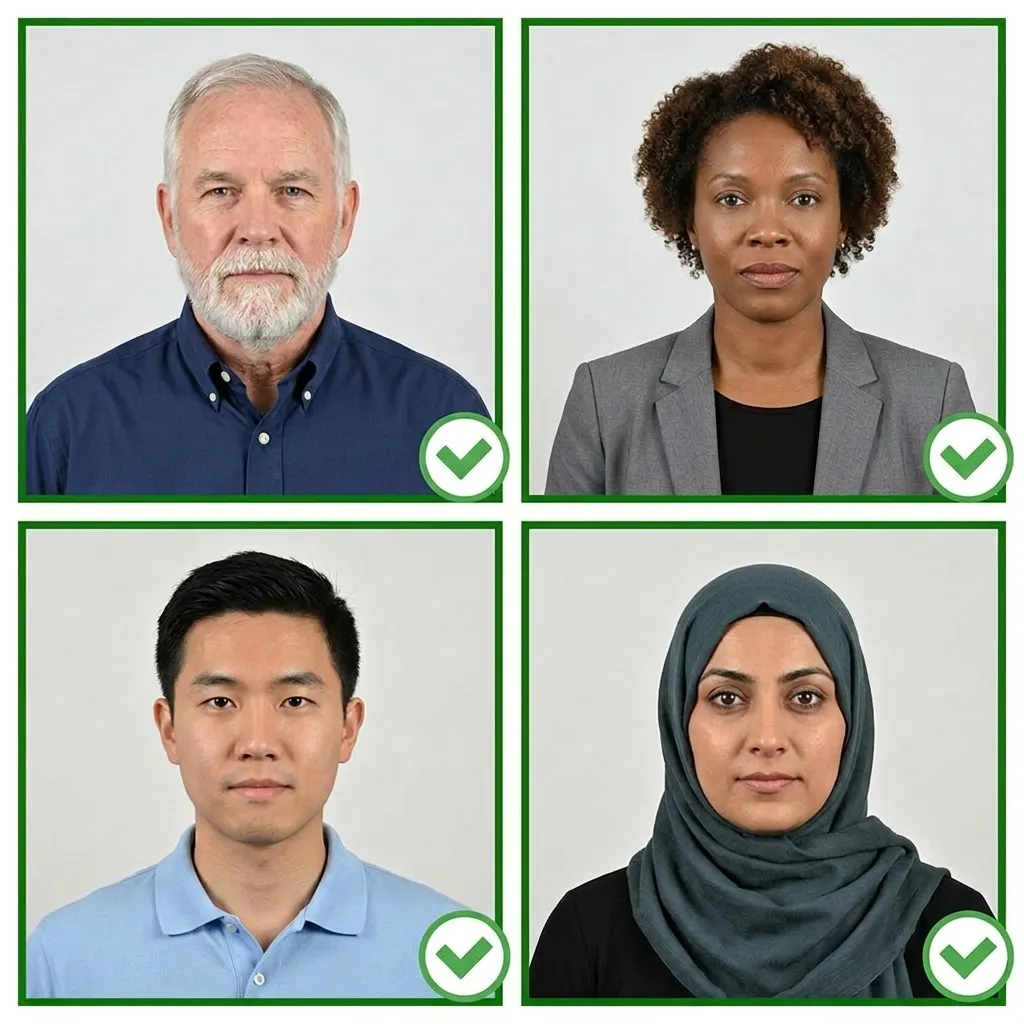
Good and Bad Examples of EU Passport Photos

Good and bad examples of passport photos

Comparison of acceptable and unacceptable passport photos

Frequently Asked Questions

What size is an EU passport photo?

An EU passport photo must be exactly 35x45mm (3.5x4.5cm) based on ICAO 9303 standards. Your face must measure between 32mm and 36mm from chin to crown, occupying 70-80% of the photo. The digital version should be 826x1062 pixels at 600 DPI.

Which countries accept the EU passport photo format?

The 35x45mm ICAO 9303 photo format is used by all 27 EU member states: Austria, Belgium, Bulgaria, Croatia, Cyprus, Czech Republic, Denmark, Estonia, Finland, France, Germany, Greece, Hungary, Ireland, Italy, Latvia, Lithuania, Luxembourg, Malta, Netherlands, Poland, Portugal, Romania, Slovakia, Slovenia, Spain, and Sweden.

Can I wear glasses in an EU passport photo?

The rules on glasses vary by EU member state. Many countries including France, Germany, and the Netherlands now prohibit glasses entirely. The trend across the EU is towards a complete ban. Where glasses are still permitted, only clear untinted lenses are allowed with no glare or reflection. Sunglasses and tinted lenses are never permitted. We recommend removing glasses before taking your photo to ensure acceptance across all EU countries.

Can I smile in an EU passport photo?

No. EU passport photos require a neutral expression with your mouth closed. Smiling, frowning, and any exaggerated expressions are not permitted. Both eyes must be open and clearly visible. This is required for biometric facial recognition systems used at EU border controls and e-gates.

Can I take an EU passport photo with my phone?

Yes. You can take an EU passport photo with any modern smartphone. Use the rear camera (not selfie mode) at arm's length or have someone else take the photo. Stand about 1.5 metres from the camera against a plain white or light grey background in good, even lighting. Then use our tool to crop and format the photo to the exact 35x45mm specification.

What background is required for an EU passport photo?

The background must be plain white or light grey, with no patterns, objects, shadows, or textures. There must be clear contrast between your face and the background. This is specified by ICAO 9303 and EU Council Regulation 2252/2004 for biometric compatibility with facial recognition systems.

How recent must an EU passport photo be?

Your EU passport photo must have been taken within the last 6 months. It should reflect your current appearance. Some individual member states may have stricter requirements, so always check with your national passport authority.

Why do EU passport photos need to be biometric-compatible?

EU passport photos must meet biometric standards (ICAO 9303, ISO/IEC 19794-5) because they are used for automated facial recognition at border control e-gates across the Schengen Area. The neutral expression, specific face size, and plain background ensure that facial recognition algorithms can accurately match your face at border checkpoints. This speeds up border crossings and enhances security.